There are currently 98 women who are Members of Parliament (MPs) out of the 338 seats in Canada’s House of Common. That is approximately 29%.
During the 2019 Federal Election, all four major political parties in race ran a record number of female candidates according to Equal Voice, which is a non-profit committed to electing more women to all levels of government across Canada.
However, this is still not enough as women are half the population of this country, and we form less than a third of the presentation. According to data from the Inter-Parliamentary Union, Canada ranks 56 out of the 193 countries for the number of female parliamentarians. Rwanda is in first place with over 60% of their parliamentarians being female. The United States ranks at 83 with 23% of Congressional and Senate representatives being females.
This is incredibly concerning considering Canada is recognized to be one of the more progressive and open societies in the world and the average Canadian would see ourselves as champions of women’s rights and female empowerment.
So why are we so behind on gender parity in politics?
Unfortunately, for the most part gender parity has been a struggle in most, if not all, industries and sectors when it comes to leadership roles in Canada. Therefore politics would be no exception to that. However, the problems for women in politics is far more systemic and the roadblocks are perpetrated by traditional family structures, lack of supports, media, and most concerning, the normalization of sexual harassment and violence.
I would rank the roadblocks for women in Canadian politics as follows:
- Family responsibilities, primarily children, and the lack of child care supports
- Lack of networks and financial resources
- Media and the portrayal of women
- Sexual harassment and violence
Family:
Women continue to be the primary caregivers in households. When considering a political run they usually consider their family and weigh it against the demands of public life. For most women their family responsibilities continues to be the greatest barrier in their participation.
Women are constantly in a ‘double bind’ dealing with the pressures of being successful in their public life and equally, if not more, outstanding in their private roles as spouses and mothers.
Melanee Thomas published a research paper that explores the barriers to women in politics and found that those who were successful usually attributed it to the support that they had from their husband and close family and friends. However, those sentiments are limited and rarely found. Thomas concludes that as “women are far less likely than men to receive a suggestion that they run for political office from a personal source.”
In the podcast No Second Chances (NSC), former First Ministers of Canada all spoke about the pressures of being in public life and the ridicule they received as mothers. Most who had children, particularly school aged kids, were constantly scrutinized on whether “they were good mothers.”
Alison Redford, the first female Premier of Alberta, had to resign in 2014 over her expenses. One of the sticking points was that her daughter travelled with her and that was deemed inappropriate for taxpayers to have to cover her travel costs. Whereas Redford’s predecessors, who were all men, easily travelled with their families and children, and did not endure the same scrutiny.
I worked for a male cabinet minister for seven years, who is a stellar human by all accounts. And in all my years of working with him, I have never heard or seen someone go after him or any other male politician on their abilities as fathers or question whether they were a ‘good dad’ or if they were spending enough time with their child. More-so, he was praised when he brought his daughters to events for being such a great dad.
Til death due you part or P-O-L-I-T-I-C-S:
“Promotion to a top job in politics increases the divorce rate of women but not for men, and women who become CEOs divorce faster than men who become CEOs,” states Johanna Rickne, a professor at Stockholm University.
The chances of splitting doubles for women parliamentarian usually as a result of changing economic and social roles. The demands of public life means less time at home, which means less time spent together and more demands on the spouse when it comes to household tasks and childcare.
Sadly, the First Ministers interviews in NSC reaffirm this notion that women are more likely to find themselves divorced while in public life compared to men.
No Money, No Honey:
A writ is the period in which election campaigning is officially designated by the electoral body i.e. Elections Canada or Elections Ontario. The last day of the writ is “Election Day.” The minimum time for writ is usually 28 days but each province and Canada has their own set of rules and procedures around elections and the date of voting, which usually is the third Monday of October for federal elections or first Thursday of June for Ontario.
During a writ, on average, you will need anywhere between $100,000-$150,000 to run a comprehensive campaign, which increases your chances of winning. This money will go towards expenses such as having a campaign office, printing lawn signs, flyer mail-outs, IT costs, staff cost and etc. There are spending limits that are designated by a specific amount allocated per voter in a jurisdiction. In Ontario the spending limit is $1.30 per eligible voter in a riding (electoral district). So if you have 100,000 eligible voters, the spending limit is $131,000 for the riding.
This money has to be fundraised from individual donors that are limited by a donation cap of usually $1500-$1600 per year. It is illegal for an individual to make a contribution beyond the designated limits. The money can’t be borrowed and campaigns can’t be bankrolled by any business. There are no corporate or union donations permitted.
This makes fundraising challenging in a campaign and unless you have some really good friends and family members who can reach deep into their pockets, you are left at the mercy of your network.
Women tend to have smaller professional networks than men because their entry and progression in their careers has always been delayed either via societal norms, impact of the glass ceiling, and family responsibilities which limits their access to professionals in the financial, law, or any other rich sectors that typically support political candidates.
Women usually find it far more challenging to ask and raise funds for their campaigns. Further, Thomas’ found that voters and donors prefer masculine over feminine traits when supporting candidates for political office, which leads them to gravitate and trust men more, and the money follows that conventional wisdom.
And when you don’t have the money, it makes it that much harder to get the honey!
Ironically, women politicians are stereotypically considered to be more masculine than feminine.

You need the media, whether its mainstream or social. You can’t be a politician without them. But they will come after you, especially if you are woman.
In 2016, the Inter-Parliamentary Union released their findings on “Sexism, harassment and violence against women parliamentarians,” in this report they surveyed female parliamentarians from around the globe regarding increased violence and harassment in politics.
In the media section they found that respondents often believed that the “media perpetuate rumours, sexist behaviour and misogynistic remarks that have the effect of denying women any political competence.” This experience is usually coupled with stereotypical images of female politicians that are hypersexualized or vilified.
Here are some examples of the love that former Ontario Premier, Kathleen Wynne, and former US Presidential Candidate, Hillary Clinton, endured during their magical time in politics:
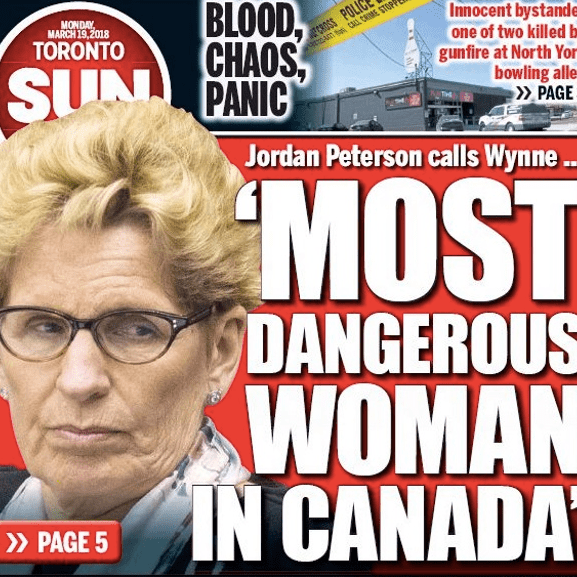
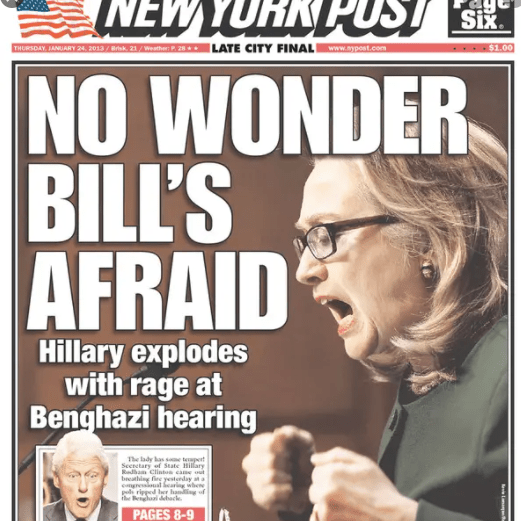
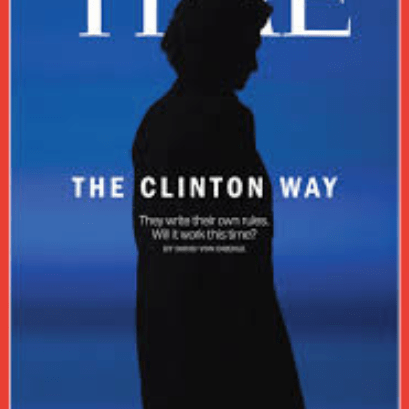
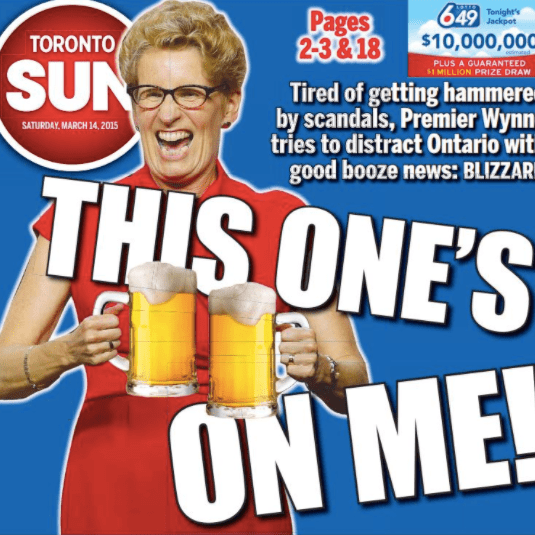
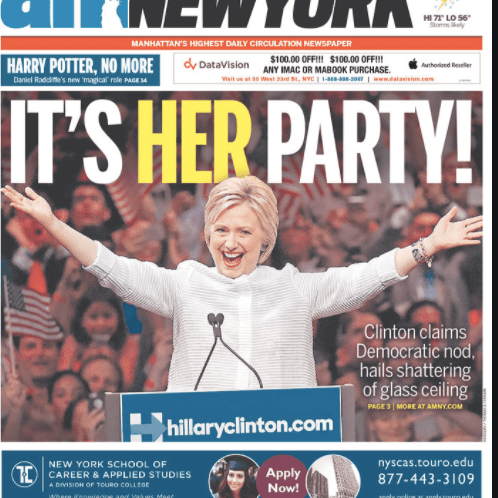
Nearly 30% of respondents believe that the media purposely circulated images and comments about them that are sexually charged or demonized them. The number rose to over 40% when these images appeared on social media platforms like Facebook, Twitter and Instagram.
In Asian, African, Middle Eastern and some European countries there are a high number of photomontages that have female politicians as nude with disparaging comments.
Add in race to the equation and you get a whole new layer of disparities on media reporting and portrayals. Where the focus of racialized women in politics becomes about their sexual exoticness.
Erin Tolley, a political science professor at the University of Toronto, studies racialized women and the news. She describes “racialized women break the political mould in two ways: once on account of their gender and again on account of their race. Their media coverage bears the marker of their intersecting identities.”
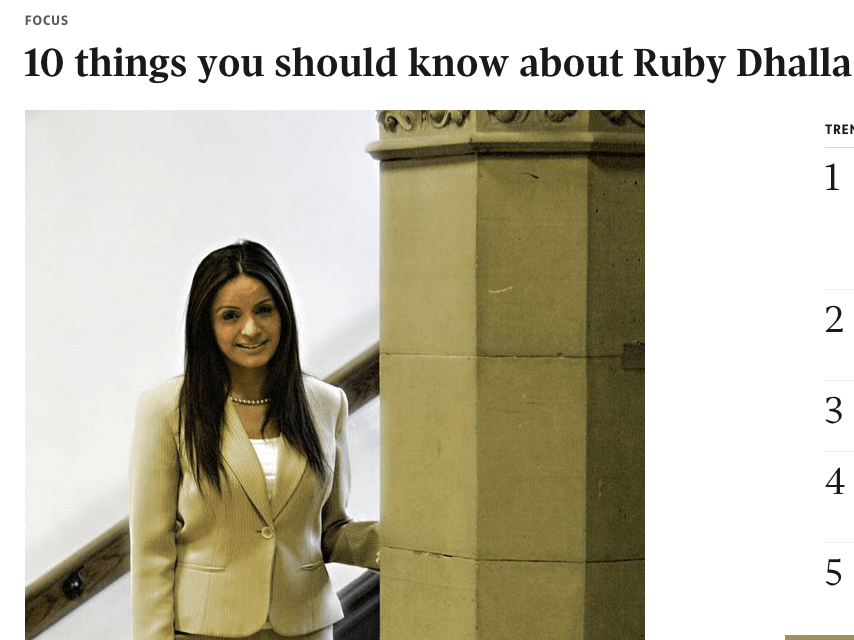
She goes onto to say “in a 2008 Toronto Star news story, then-Bloc Québécois MP Vivian Barbot was described as having a “captivating smoky voice.” In a 2009 column in the Globe and Mail, Ruby Dhalla was referred to as “a young drop-dead gorgeous, Indo-Canadian woman,” while a list of “10 things you should know about Ruby Dhalla” that appeared in the same paper said the Liberal MP is “like something out of a Bollywood movie.”
Sexual Harassment and Violence Against Women in Politics:
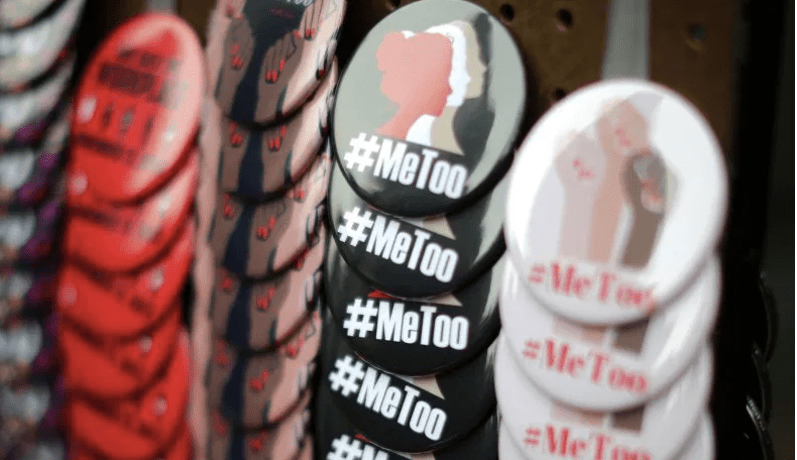
Violence against women is a worldwide problem. However, in the last four years, we have been paying more attention to violence against women in politics. This is fundamentally due to the elevation of the #MeToo movement where the ugly truths about the sexual harassment and violence women face in Hollywood and every other sector started to become unearth.
The Inter-Parliamentary Union’s report states that over 80% of women politicians globally have been psychologically abused with nearly 45% who have received death, rape, beating and abduction threats. Over 65% of respondents reported that they were often subjected to sexist and humiliating remarks during their parliamentary tenure.
They define psychological abuse as “any hostile behaviour or act likely to cause psychological harm, suffering and/or fear.” This can take place over social media, private messages, emails and other forms of communication.
In Canada, MP Agnes Macphail was the first female parliamentarian in the House of Commons in 1921. She was physically blocked from entering the building on several occasions and constantly ridiculed with sexist comments.
Fast forward to the 1980-90s, former Deputy Prime Minister Sheila Copps reported she was sexually assaulted and harassed by different male colleagues.
Most recently, MP Michelle Rempel constantly received sexually harassing threats through her social media accounts to the point that she won a court case against a stalker on Twitter who threatened to rape her at a campaign event.
In 2018 the Canadian Press surveyed female politicians in the House of Commons and found that over 60% had experience some kind of sexual misconduct. The number is much higher for racialized women, LGBTQ and for those under 40.

So where do we go from here?
We need to wake up to our own biases and remove the roadblocks:
For gender parity to become a reality in politics, we need to change the circumstances around the mentioned challenges that women face when considering or working in politics. It is not enough for us to march with the crowd but we need to use our individual voices to stand up and call out inappropriate comments against anyone’s gender, sexuality, race or any other characteristics.
We as the general public need to change our perspective towards women in politics. We need to support the spouses who sometimes might have to take on more responsibilities. We need to stop characterizing family responsibilities into gender roles or attributing the notion of competition and power as masculine.
Child care is an important element that will alleviate some of the resistance that women have towards entering into politics. Creating work spaces i.e. parliaments that have accessible childcare facilities where parents can easily access their children would make a world of a difference.
We need more people and organizations to advocate for more women in politics, and help raise the money and create funds that allows women to run successful campaigns. I encourage everyone to explore Equal Voice and get involved!
The media needs to change on the fairness of their reporting when it comes to female politicians.
Tolley states that the media shouldn’t ignore race and gender in their coverage but reevaluate the hook for stories, the way it is framed and the details they focus on when covering white men should be applied to racialized women.
“Race and gender are as much factors in the political trajectories of successful white men as they are in the stories of racialized women who have triumphed. News coverage should reflect this.“
And the violence, it just needs to stop. We all need to use our voice to make it stop, to demand better and to call out the trolls and the perpetrators who sexually harass women.
We also need better accountability, investigative bodies and reporting for incidences where women are subjected to any type of harassment. These bodies shouldn’t exist in secrecy and if the victim wants, the filing of complaints should be public.
I recognize that we have made significant gains since the women’s suffrage movement, however, we still have a long way to go. I am optimistic as there are many great champions both in women and men who are doing their part to make the pathway for women into politics much easier.
My one request is the next time a female candidate knocks at your door or calls at your home for support, just evaluate their vision and experience, and if it matches yours, donate $5 to her campaign.
That $5 is the cost of printing 1 large lawn sign for her campaign!
Until next time, keep safe and if you live outside of Toronto, enjoy those patios!
 Sara Alimardani
